TAG STORY · JOURNAL
While Keeping the Company Alive, How Much Time Do I Have Left to Build the Product?
Take on a little client work, bring in cash, then get back to the product.
TAG Story ·

But when, exactly, does “then” arrive?
In Paul Graham's 〈The Fatal Pinch〉, he notes that when another funding round is unlikely to keep a company going, it may need a different way to earn money. That could include consulting or custom development work. Clients' bespoke requirements can keep pulling the company toward a service business, leaving founders to contain the distractions that work creates.
For an early-stage founder, much of that revenue requires personal time: discussing requirements, pricing, delivering, making revisions, and finally chasing payment.
When those activities fill the calendar, the product gets pushed back.By the time the current work is finished, the next living expenses and operating bills arrive.
And the founder starts looking for another project that will keep food on the table.
What Does Work That Does Not Scale Leave Behind?
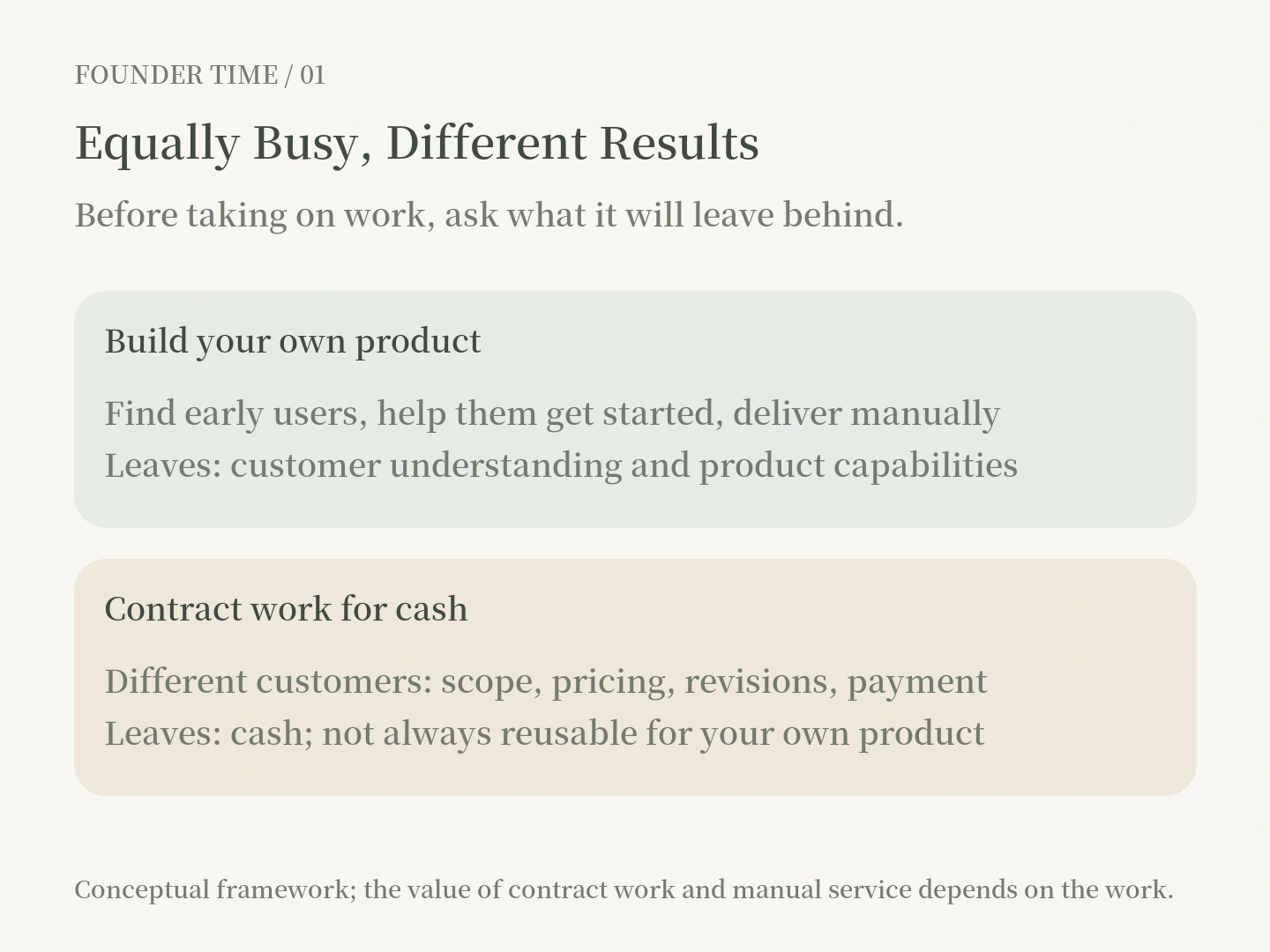
Finding the first customers yourself, helping with onboarding, and manually doing what the product cannot yet automate are all difficult to scale. Yet they can directly advance the core business because, fundamentally, this is time founders need to spend improving their own product and searching for product-market fit.
In 〈Do Things That Don’t Scale〉, Paul Graham discusses this kind of work that moves a product forward: founders can learn from early users what problems the product really needs to solve.
An afternoon spent finally understanding why a target customer will not pay may be worth more than building another feature.
The harder case is the other kind of client work we started with. It brings in revenue, but serves a different audience and solves different problems from the founder's main product. Once it is finished, there may be very little to bring back into that product.
The irony is that founders sometimes have to accept it anyway. Bills do not wait until the main product finds product-market fit.
The founder still needs to understand what accepting that work will cost.
More Cash—but How Much Usable Time?
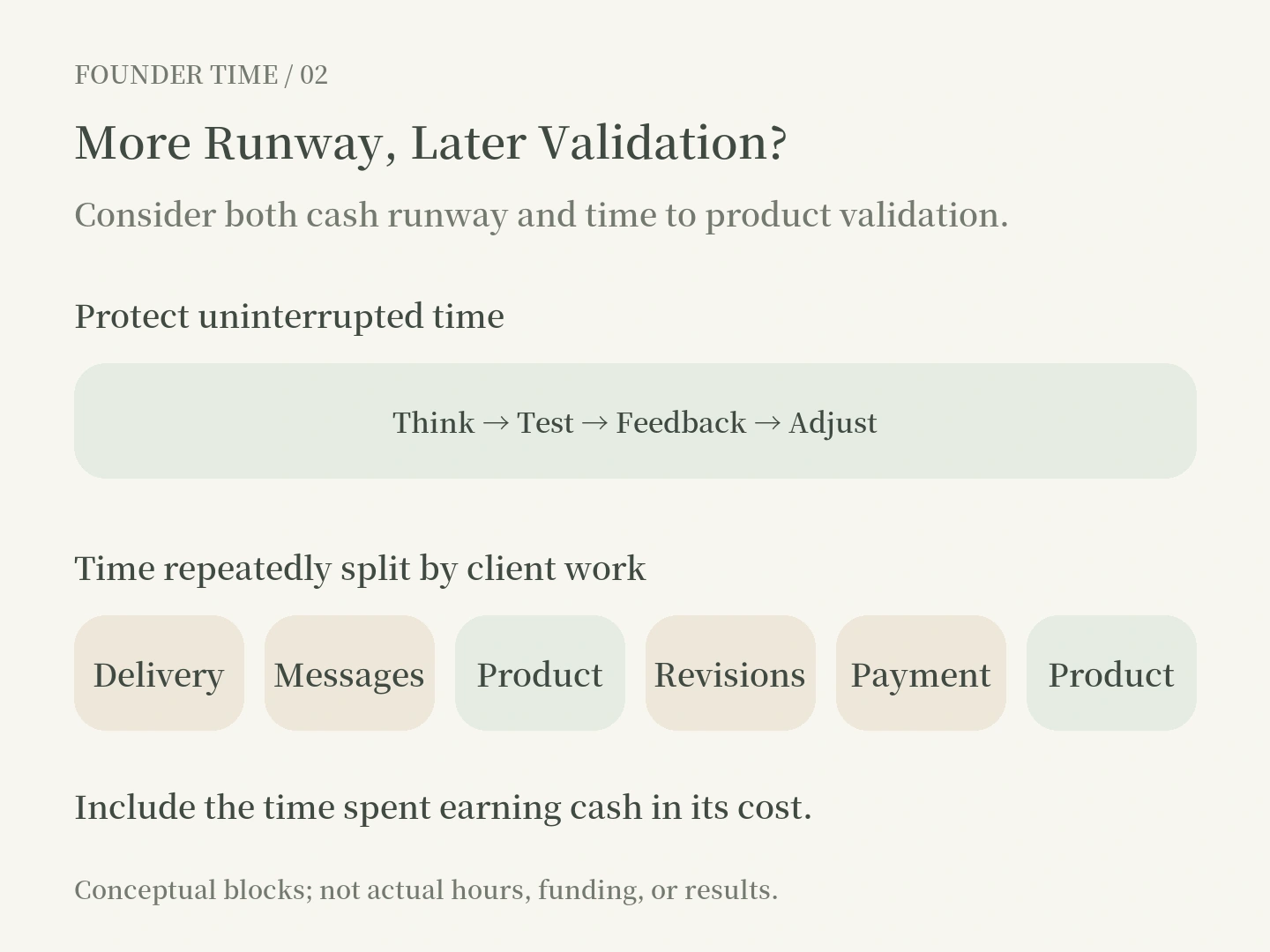
Suppose client work buys the company a few more months. In exchange, the founder works for someone else all day, answers that client's messages at night, and touches the product only in scattered moments. Even though the financial runway grows longer, the date of the next product test moves further away, too.
Building a product takes sustained time to think, test, and adjust based on feedback.If every stretch of focus ends with a switch back to another client's needs, progress suffers substantially.
This is one value of fundraising: it can give a team an uninterrupted period to test important assumptions properly. Even if an attempt fails, founders can use the remaining time and money to try again.
But fundraising itself consumes a great deal of a founder's attention. Whether the path is seeking investors, taking on projects, or selling a smaller service first, founders need to include the time required to obtain the cash in their calculations.