TAG STORY · JOURNAL
What Would You Give a Fifteen-Year-Old Genius?
TAG Story ·
❁ The best teachers?
❁ The finest learning materials?
❁ Or enough money to stop worrying about making a living?
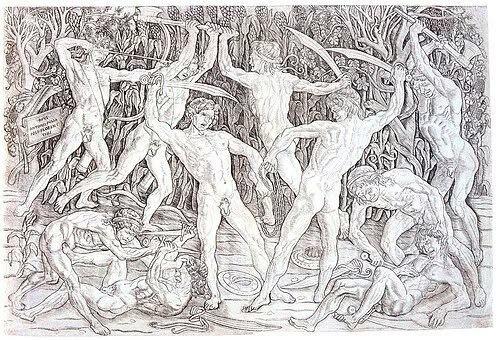
Around 1490, Lorenzo de' Medici faced a similar question. The young genius was Michelangelo.
He had not yet carved David. He was a teenage sculptor the world had barely noticed.
Around 1488, at 13, Michelangelo entered the workshop of the Florentine painter Domenico Ghirlandaio as an apprentice. This was the usual way to learn an artist's craft: follow a master, watch his brushwork, help with the workshop's commissions, imitate, practice, and gradually develop skills of your own.
Then, around 1490, he entered the San Marco sculpture garden supported by Lorenzo de' Medici. Calling it a school does not quite capture it. It was closer to a private garden bringing together ancient sculptures, working artists, young creators, and the Medici collection.
Michelangelo could stand before ancient Greek and Roman figures, study how muscles twisted, see how stone conveyed weight, and discover how people centuries earlier had understood the human body.
Today, studying an ancient statue can begin with Google or a question to AI. For a boy in the fifteenth century, being able to see it in person and learn from it directly opened up an entirely different world.
The young Michelangelo even lived within the Medici household's orbit. His daily encounters extended well beyond sculpture. Poets, philosophers, humanists, scholars, and artists gathered around Lorenzo. They talked about Plato, classical myths, the body and soul, beauty, and human dignity.
Michelangelo was learning more than how to carve a piece of stone. He was living among people asking what it meant to be human.
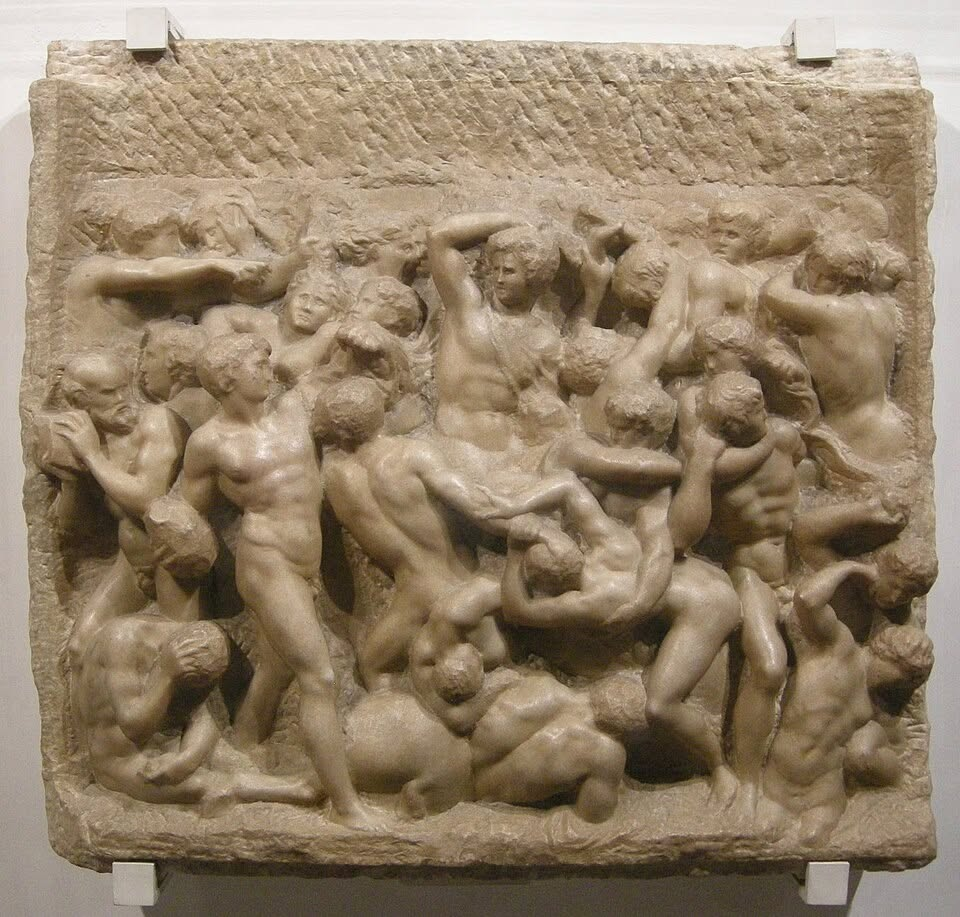
His youthful relief Battle of the Centaurs was made for Lorenzo, with a subject suggested by the poet Poliziano. A poet offered a story; a young sculptor transformed its conflict, bodies, and force into marble.
This was more than a wealthy patron paying an artist to deliver an object. One person's knowledge became material for another person's creation.
A teacher can show you how to hold a chisel. An environment changes you more gradually, pressing you to ask, “What is worth creating?”
When knowledge, works of art, people, spaces, and conversation coexist, learning happens far beyond the hours marked as class. It becomes part of every moment.
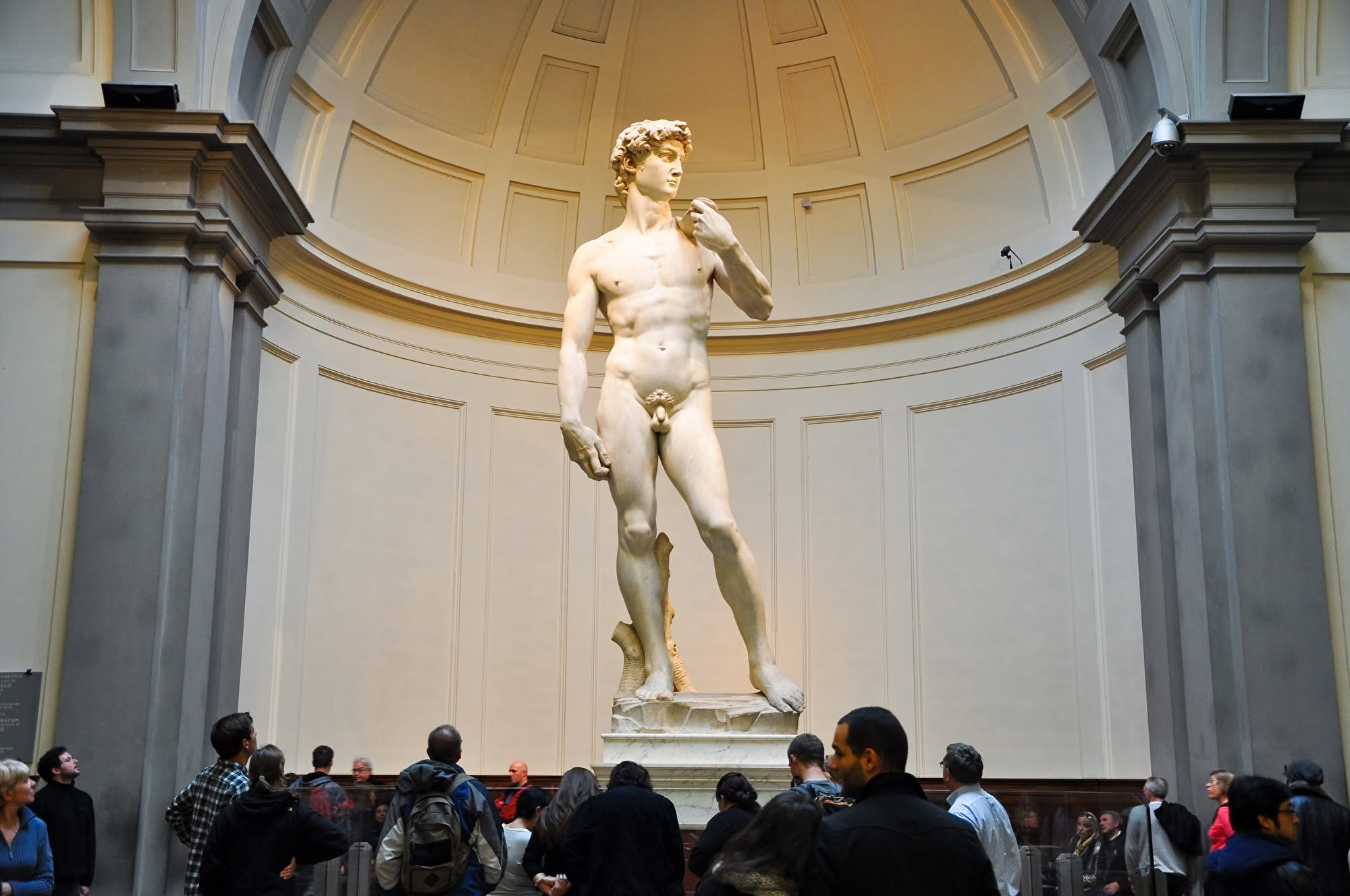
It is easy to think that education means giving someone the best knowledge, teachers, and courses. Yet who a person becomes often depends on what they see each day, what people around them discuss, what they are allowed to approach, and what their world takes for granted.
Perhaps the deeper question in education has never simply been, “What should I put into this person's head?”
It is, “What kind of world should I place them in?”
➤ What do they see every day?
➤ Whom can they ask for guidance?
➤ And who will take their work seriously enough to respond?