

TAG STORY · JOURNAL
What Really Matters in the Race for Efficiency
Business decisions from Rockefeller to the AI era
TAG Story ·

Cover: West Coast Art Co.
After making work cheaper, a company still has to decide where to put its resources, whom to work with, and why customers should keep paying. Those choices determine whether efficiency becomes a lasting advantage.
01 | The Rules of Competition Revealed by a Contract
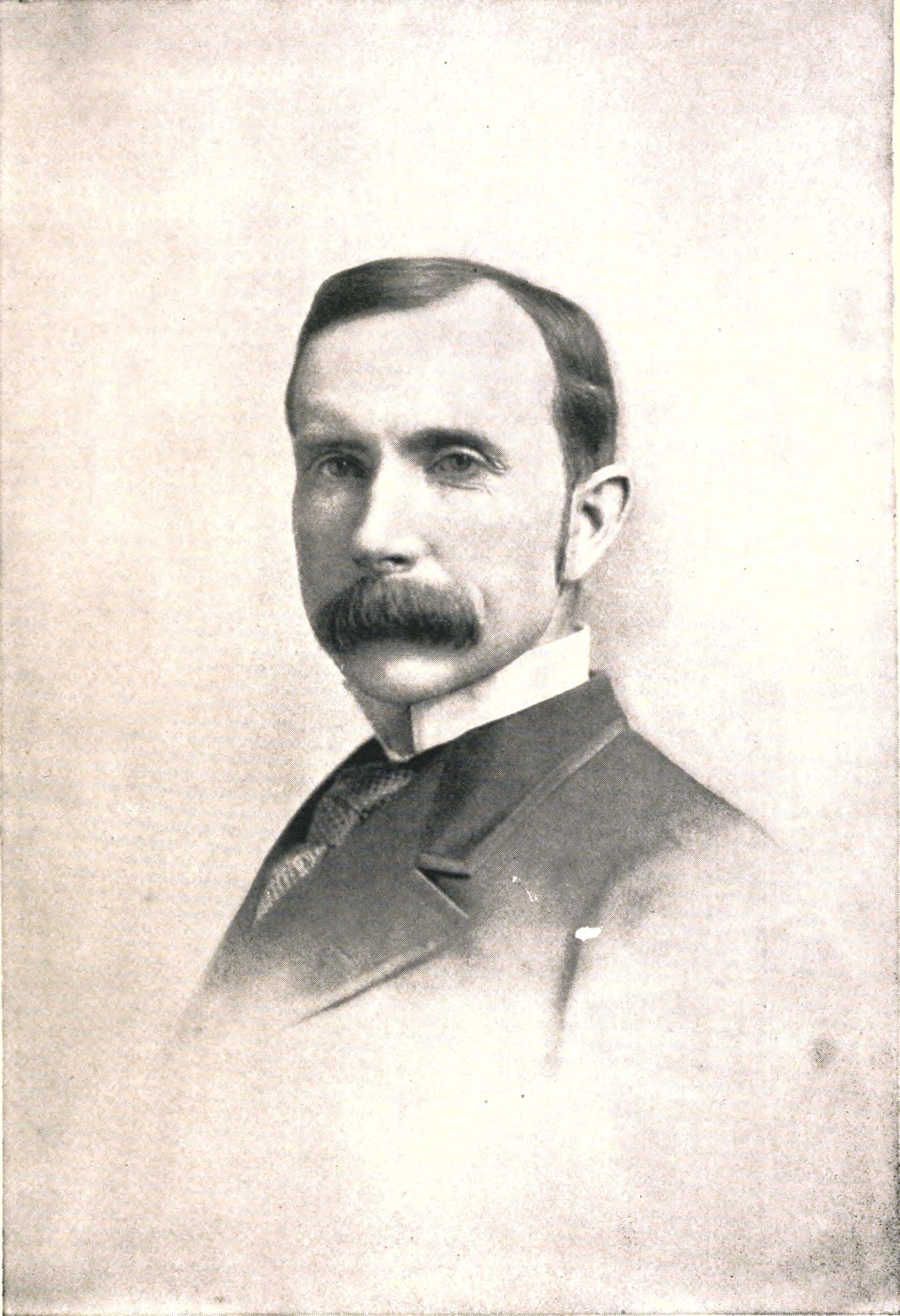
In 1872, a railroad contract proposed an unusual arrangement. Participants would receive discounts on their own freight, while the railroads would also pay the alliance rebates on competitors' oil shipments. The South Improvement Company plan, in which Rockefeller participated, was never implemented. Yet its design revealed a competitive logic: a company's advantages can come from better operations and from terms unavailable to others. (Source: 1872 SIC contract;Crane,2012)
That takes Rockefeller's story beyond cost management. Consistent large volumes and better logistics could indeed reduce railroad costs. It does not follow that every preferential term was simply a fair return for efficiency. Understanding Standard Oil requires considering operating capability and market power together. (Source: Crane,2012)
As an operator, my question is what possibilities a company creates for the market when it does something better—and what dependencies it takes on itself. That question still applies when we discuss AI today.

02 | Efficiency Gains Leave an Allocation Decision
Efficiency matters. Some companies' low costs rest on years of accumulated purchasing, processes, and organizational capabilities that competitors cannot easily copy. Such an advantage can be central to a strategy. But if an improvement comes from a tool every competitor can buy, it is unlikely to be a lasting reason to choose your company on its own. What operational improvement can achieve and how a company chooses to compete are connected but distinct questions. (Source: HBS: operational effectiveness and strategy)
An easily missed point is that the efficiency dividend may not stay with the company. Lower costs may be competed away through price cuts. Time saved by employees does not immediately become cash on the balance sheet. Before deciding what comes next, managers need to identify whether the improvement created profit, delivery capacity, or value for the customer.
Reconcile the Gain Before Allocating It
Include added review, exception handling, and price changes before judging what the improvement has actually left.
Form of benefit | First verify | Allocation options |
|---|---|---|
A | Cash headroom | After additional spending and revenue changes, has available cash increased? | Compare reinvestment, reducing commitments, and keeping cash. |
B | Delivery headroom | Can the released time be reassigned without sacrificing quality? | Address delivery bottlenecks, first confirming someone needs the extra output. |
C | Customer value | Can customers save money or effort, or complete the job more reliably? | Track renewals, adoption, and willingness to pay, and establish how the company captures a return. |
All three effects may occur together. Time, cash, and customer value cannot simply be added together.
Suppose a team uses AI to create content faster but shifts review and error handling onto colleagues. A local gain may conceal a larger overall burden. If saved time produces only more interchangeable content, it may do little for retention. A faster tool cannot replace judgment about the outcome.
Management systems need to catch up, too. Rewarding only output, speed, or one department's costs encourages teams to optimize the numbers they can see. A CEO needs to connect responsibility to the complete outcome: who defines quality, who handles exceptions, and whether the additional output actually improves the customer experience.
Only then comes allocation. If trust and renewals are constraining growth, putting every saved hour into output may accomplish little. The capacity released by efficiency should flow toward the constraint that actually limits the company. Where appropriate, it can also reduce fixed commitments or preserve cash. Saving a cost is not, on its own, a reason to expand.
03 | Being Able to Enter a Market Does Not Mean Customers Will Pay You Separately
AI makes this distinction more urgent. Using an existing model to complete a task and building the strongest general-purpose model yourself have different capital, talent, and supply requirements. When a capability becomes easier to purchase, new companies can build products faster—and customers can find substitutes more easily.
A division of labor may emerge, with a small number of suppliers providing foundational capabilities and other companies serving different needs. Upstream scale and downstream opportunities can coexist. More kinds of products, however, do not guarantee sustainable profits for independent companies.
The question for a new entrant is why customers would buy this service from an independent company.Needing a feature does not mean a customer wants to manage another vendor, perform another integration, and pay another bill.
Generating a customer service reply, for example, completes only part of the job. Knowing what happened to an order, handling refunds and exceptions, and making sure promises are kept comes closer to the outcome the customer needs. A new company that connects that work and takes responsibility for delivery at a reasonable cost may have a reason to exist.
Why Should a Customer Add Another Vendor?
Greater improvement in customer outcomes gives an independent service a stronger reason to exist. The burden of an additional vendor changes the conditions required to win the sale.
Burden / Outcome improvement | Small improvement | Large improvement |
|---|---|---|
High burden | Redesign how it is offered Consider partnerships, embedding in existing workflows, or ending standalone sales. | Make implementation part of the product Design integration, delivery, and responsibility together. |
Low burden | Run a lightweight test Validate demand first, controlling acquisition and service costs. | Test willingness to pay first Let customers make a smaller commitment to establish the value of the outcome. |
Fix one customer segment and one task. Compare with the best alternative that customer can actually use.
The same improvement may require different ways of delivering it.
Compare task completion, speed, and reliability first. Separately account for procurement, integration, learning, and new responsibilities.
Four Questions to Bring to the Management Meeting
High burden × Small improvement | Redesign how it is offered
Are customers declining because the gain is limited, or because buying from another vendor is too much trouble?
Evidence to obtain next: compare willingness to use a standalone offering versus one embedded in an existing workflow, to see whether a different delivery model removes the friction.
High burden × Large improvement | Make implementation part of the product
Who benefits from the improved outcome, and who bears implementation costs and new responsibilities? Do they share a decision process?
Evidence to obtain next: check actual implementation hours, responsibility assignments, and acceptance feedback from both users and buyers.
Low burden × Small improvement | Run a lightweight test
Is the improvement needed frequently enough to justify continued use?
Evidence to obtain next: observe real use, recurring demand, and service effort, and assess whether the acquisition approach can sustain the business.
Low burden × Large improvement | Test willingness to pay first
Which outcome will customers pay for? What remains of that reason when their existing supplier adds a similar feature?
Evidence to obtain next: collect records of actual purchasing or churn decisions, including alternatives considered, reasons for payment, and procurement conditions.
This also helps explain why innovators do not necessarily capture most of the returns. Bringing technology to customers requires distribution, service, and complementary capabilities. When those resources are difficult to replace, their owners may gain more bargaining power. (Source: Teece,1986)
“We have data” and “we understand the industry” are only starting points. Managers need to show how those accumulated resources improve outcomes, reduce customer friction, and justify continued payment.
04 | Cooperation Requires Commitments and a Proportionate Exchange
Railroads were a critical input for bringing Rockefeller's products to market. Today's AI companies must likewise consider whose capabilities they depend on for growth. Large cloud providers may supply capital, compute, and distribution while also offering products similar to their partners'. The FTC's 2025 study of major cloud and model partnerships records these overlapping roles and contractual arrangements. (Source: FTC, January 2025)
A partnership can make an otherwise inaccessible market viable. A stable purchasing commitment can give a supplier a reason to invest, reserve capacity, or develop jointly. Demanding deep cooperation while refusing any dependency may not secure the best terms.
How Much Commitment Does This Partnership Merit?
Joint investment can create value unavailable elsewhere. Judge the commitment against both the partnership's benefits and the actual cost of switching.
Switching cost / Additional value | Low additional value | High additional value |
|---|---|---|
High switching cost | Prioritize renegotiation or reduce dependence Build viable alternatives in stages, including the cost of transition. | Support deep cooperation with safeguards Negotiate commitments, supply, and rights to adjust together. |
Low switching cost | Keep transactions simple Control coordination costs and buy as needed. | Make active use of the partnership Expand the shared value, and review the exchange periodically. |
Evaluate one specific partnership. An alternative must work in practice; a list of suppliers is not enough.
Deep cooperation may justify a higher switching cost.
Compare the partnership's additional value with outcomes from an alternative operating reliably. Calculate migration investment, contractual burdens, and delivery disruption separately as switching costs.
Four Questions to Bring to the Management Meeting
High switching cost × Low additional value | Prioritize renegotiation or reduce dependence
Which commitments continue without delivering proportionate benefits?
Evidence to obtain next: put renegotiation and gradual transition costs alongside their delivery effects, and identify an affordable adjustment path.
High switching cost × High additional value | Support deep cooperation with safeguards
If future interests diverge, who controls supply and prices, and what preserves our ability to negotiate?
Evidence to obtain next: examine both parties' future investment, available alternatives, and existing contracts, especially interruption, price adjustment, and renewal terms.
Low switching cost × Low additional value | Keep transactions simple
Has managing this partnership begun to cost more than its additional benefits?
Evidence to obtain next: check total procurement and coordination costs to see whether standard terms and on-demand transactions are sufficient for delivery.
Low switching cost × High additional value | Make active use of the partnership
As cooperation grows, will today's favorable terms and flexibility still hold?
Evidence to obtain next: track benefits and changing terms as usage scales, and ensure new commitments do not erode the original exchange's value.
The managerial question is whether the exchange is proportionate: what have we committed, what capabilities do we gain, and can we keep delivering if the terms change? Rather than pursuing independence in the abstract, prioritize dependencies that could hurt customers and cash flow if they fall out of balance.
Alternatives also cost money. Maintaining multiple systems, diversifying purchases, and keeping backups all consume resources. A contractual exit right offers limited protection without the practical ability to move. A mature partnership strategy chooses worthwhile commitments and keeps affordable room to adjust around the most critical risks.
05 | A CEO Needs to Know Which Race Is No Longer Worth Running
Semiconductors offer a useful comparison. GlobalFoundries announced an indefinite suspension of an advanced process program, redirecting research and development toward other platforms and differentiated technologies. After leaving that frontier race, it continued operating a business of substantial scale. (Sources: GlobalFoundries, 2018 announcement;GlobalFoundries, 2025 financial results)
This does not guarantee opportunity for every startup: GlobalFoundries already had factories, customers, and resources. The useful lesson is that technical leadership must be judged alongside customer needs and returns on investment. Giving up the most advanced specification does not mean abandoning every worthwhile market.
As competitors keep increasing investment, managers can begin treating matching them as a duty. Every round consumes capital, talent, and management attention. If the next investment cannot generate sufficient returns through new revenue, retention, or lower costs, leadership itself can become an expensive burden.
For a team already invested, the hardest question is often: if we made this decision afresh today, would we still put these resources here? Past investment needs to be accounted for; future investment needs a renewed justification. Stopping funding for a race with inadequate returns is part of capital allocation.
Is the Next Investment Still Worthwhile?
Compare future returns with other uses of the resources, and establish a fresh case for the next commitment.
Compare from today forward, starting with existing assets, necessary commitments, and exit costs.
Decision 1 | Is there testable evidence for the next investment's return?
Current evidence | Next step |
|---|---|
Evidence remains insufficient | First decide whether testing is worthwhile Compare the cost of obtaining evidence with its ability to change the decision. Then choose a limited experiment, defer, or stop additional investment. |
Evidence exists | Proceed to Decision 2 ↓ |
Decision 2 | Is continuing better than changing direction, reallocating resources, or exiting?
Comparison result | Next step |
|---|---|
No | Stop adding resources and choose an affordable adjustment path Fulfilling existing commitments and exiting in an orderly way may still require resources. |
Yes | Invest, with a review date and stop conditions |
Innovation deserves the same examination. Improving processes and reducing resource use can themselves be innovation. A new product or business model needs fresh validation of customer demand and delivery economics. Calling something innovation does not exempt the investment from business judgment. (Source: OECD/Eurostat,2018)
06 | Bring Efficiency Back to the Management Meeting
At the next efficiency review, ask more than how much was saved. Ask each manager to explain who ultimately benefited, where the company will allocate the headroom it actually gained, and how that improves outcomes customers will pay for.
When your long-term advantage depends on an important partnership, one more question is worth asking: why will the favorable terms you negotiated today still work in your favor at the next renewal?