

TAG STORY · JOURNAL
Four Forms of Family Capital: What Does the Next Generation Inherit Beyond Wealth?
Family Office Series · Vol. 03 | Resources, judgment, trust, and a shared narrative
TAG Story ·

After a family divides its property, what remains to help the next generation move forward?
A company, a few properties, an investment portfolio. Put them on a list, and the inheritance appears measurable.
The harder questions emerge when the handover begins. Who can manage the assets? Who decides when people disagree? Why should longstanding customers keep working with the business? Once cousins have lives of their own, why should the family continue together?
Assets on paper can be counted. Judgment, outside trust, and the willingness to cooperate are harder to put on the same balance sheet.
This article uses Stonehage Fleming's four capitals framework: financial, intellectual, social, and cultural capital. Cultural capital includes the values, spirit, and shared narrative discussed here.
Financial capital: What do we own?
Intellectual capital: How do we exercise judgment?
Social capital: Who is willing to trust us?
Cultural capital: Why keep moving forward together?
01 | Financial Capital: Arrange How Capital Will Work, as Well as How It Will Be Divided

Some founders want an equal distribution, believing that giving every child the same amount is fairer.
But if two children each hold half the shares and major decisions require both to agree, a disagreement can stall the company unless there is a deadlock procedure. Equal ownership does not inevitably prevent decisions. Authority, approval thresholds, and dispute procedures need to be arranged in advance.
The same issue applies to money. Separately held assets may change the scale and coordination of investments the family once made together.
Cash, stocks, real estate, and business equity are financial capital. The questions extend beyond who receives how much: who holds it, who uses it, who benefits, and who is responsible for deciding?
Succession must consider fairness, decision-making capacity, funding needs, and successors' own choices together.
The Vanderbilts' estate arrangements show how different generations made different distribution choices.
When American shipping and railroad magnate Cornelius Vanderbilt died in 1877, he left most of his estate to his son William Henry Vanderbilt.Historical material from New York City's Landmarks Preservation Commission records that William received approximately US$95 million.
By William's death in 1885, the estate had grown to about US$200 million. According to the National Park Service's history of Biltmore, he established a US$5 million trust for each of his eight children and divided certain other assets equally. Most of the remaining estate went to his two elder sons.
The arrangement combined a common financial foundation with an unequal division of the remaining inheritance. It reminds us that dividing everything equally is not the only option.
Family wealth can also fund social status and a way of life. In 1895, encouraged by her mother, Consuelo Vanderbilt married the ninth Duke of Marlborough.Southampton History Museum's account records the marriage's substantial financial arrangements and their connection to the duke's need to restore Blenheim Palace.
For succession, the useful question is what the family wants its capital to support: the continuing business, members' financial security, or status and display? Different purposes create different spending and responsibilities.
After distributing property, the family still needs a system to manage, use, and review its capital over time.
A place to start: Alongside each person's share, write down who can decide, what happens during a disagreement, and which expenses require joint approval.
02 | Intellectual Capital: Let the Next Generation Participate in Decisions

Do a good school and an impressive degree make someone ready to take over?
An excellent education offers theory, research, and discussion. Business decisions, however, often involve incomplete information, conflicting interests, and uncertain outcomes. Successors need to make their own choices under those conditions.
Intellectual capital includes professional skills, experience, industry understanding, and accumulated wisdom. Founders can also pass on the process they use to evaluate choices.
Why were you willing to invest? Which risks were acceptable? When should you stop? If the judgment proved wrong, how much could you afford to lose?
Past mistakes matter just as much: a misguided guarantee, overexpansion, a partnership poorly understood, or a decision that put pressure on cash. These experiences can become case studies, decision records, and risk checklists.
The long correspondence between Rockefeller and his son offers another way to understand succession.
Published in cooperation with the Rockefeller Archive Center, 《Dear Father/Dear Son》 collects their letters and reveals decades of wealth transfers, family values, and philanthropy.In the correspondence excerpts published by PBS, a letter from 1899 records the younger Rockefeller acknowledging mistakes and accepting responsibility while his father continued to place trust in him.
Read this way, succession can include ongoing feedback, responsibility, and review. The next generation needs opportunities to explain its decisions and learn to face the consequences of getting them wrong.
Before giving your child an answer, let them practice explaining why they would make that choice.
Early exposure to real problems, with responsibility within affordable limits, gives judgment room to develop.
A place to start: Choose an important past decision. Ask your child for a judgment first, then discuss the information available, the tradeoffs, and the costs that followed.
03 | Social Capital: Help the Next Generation Earn Trust of Its Own
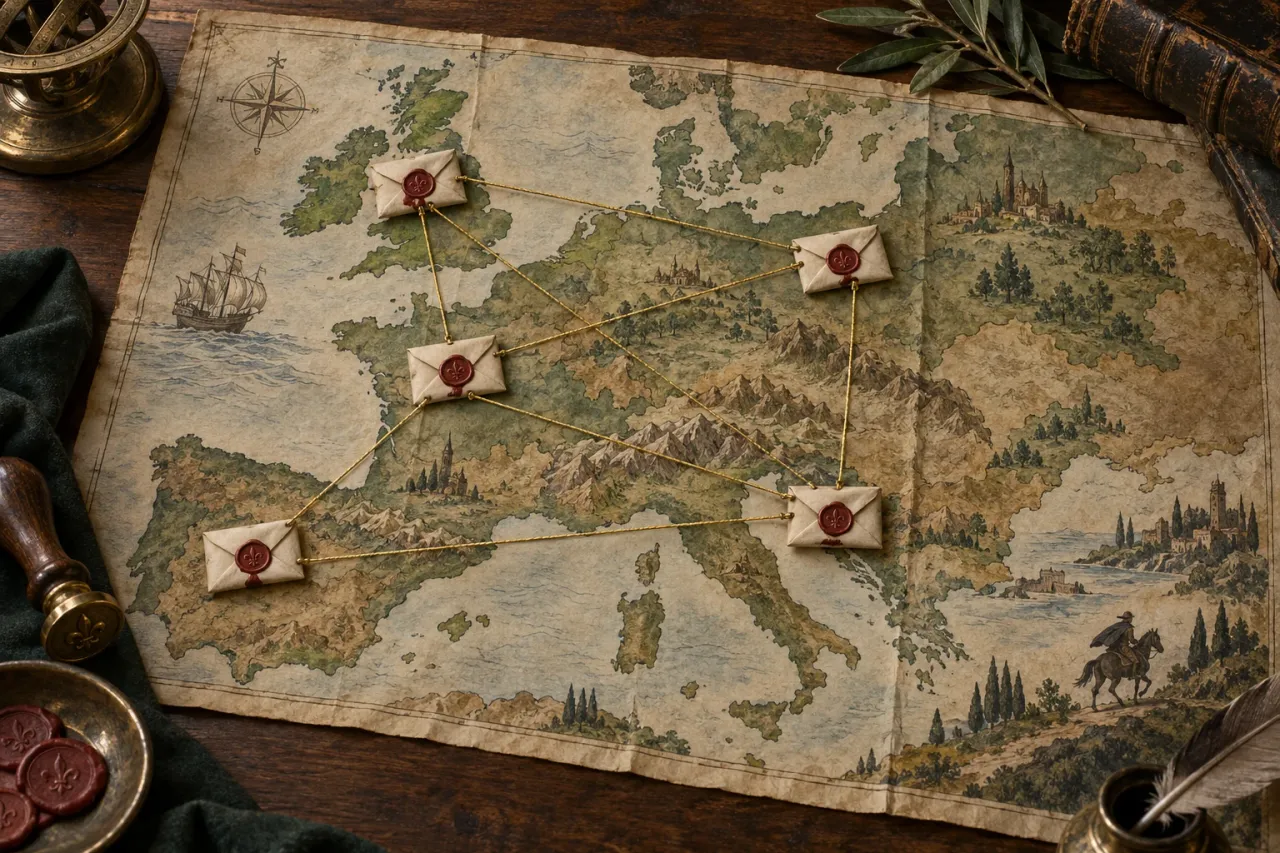
A founder takes a child to dinner and introduces longstanding business partners. That is an important beginning. But knowing the next generation does not mean trusting it.
A founder's standing often rests on years of dealings, promises kept, and problems handled well. Relationships can be introduced. Successors need to earn trust themselves.
Social capital includes the family's outside relationships, reputation, networks, and ability to participate in communities.
The Medici remind us that succeeding to a position does not automatically secure support.
After Lorenzo de' Medici died in 1492, his son Piero succeeded him. In 1494, Charles VIII of France invaded Italy. Piero's concessions to the French provoked opposition from Florence's government and citizens, and he ultimately fled.Palazzo Medici Riccardi's historical account records the conflict and the family's expulsion from the city.
A surname can be inherited. Support and legitimacy still need to be established.
The Rothschilds offer a different arrangement worth studying.Rothschild & Co.'s history describes how Mayer Amschel Rothschild's five sons built networks of agents, couriers, and transport from Frankfurt, London, Naples, Paris, and Vienna.
For succession, the instructive element is the organization of relationships and information into a cross-regional network, allowing cooperation to extend beyond one founder's contacts.
Founders introducing their children to partners today can gradually assign real responsibilities: prepare information, answer questions, follow through on promises, then complete a collaboration independently.
An introduction provides access. Keeping commitments builds the next generation's own credit.
A place to start: At the next meeting with an important partner, give your child a task with a clear beginning, deliverable, and follow-up. Let the partner see their performance.
04 | Cultural and Narrative Capital: Why Do We Still Want to Continue Together?

By the third or fourth generation, cousins have lives of their own. Some work in the family business, others start companies elsewhere, and some want an entirely different path.
At that point, the reasons for jointly owning family assets or shares need to be understood afresh.
Who are we? Which principles from the past are worth keeping? What future should these resources support? What changes can the next generation help make?
These questions form the family's culture and shared narrative. Stories explain where the assets came from and give family members a way to discuss which principles they want to carry forward.
A story that future generations can understand must also accommodate mistakes, costs, and different perspectives.
If the family history permits only the founder's successes and no discussion of failure, or shared values demand obedience without debate, the story may gradually lose its force.
A living family narrative gives descendants a place to participate.
Trusts, corporate documents, and contracts can arrange rights, obligations, and procedures. Shared values and stories can help people want to cooperate. Both need fair institutions, reliable information, and reasonable room for choice.
A family's continuity cannot rest solely on locking up assets or telling a compelling story.
A place to start: Choose an old object or photograph the family has kept. Invite different generations to explain its meaning, which principles they would preserve, and which practices they would change.
Begin Succession by Taking Stock of All Four Capitals
Beyond property, what experience are we leaving? Which relationships must the next generation build itself? Which principles deserve continued discussion and practice?
At the next succession conversation, take stock of these four capitals together:
Capital | What the next generation receives | A question to ask first |
|---|---|---|
Financial | Usable resources and systems | After the handover, who decides how assets are used? |
Intellectual | Experience and methods for judgment | Which important decisions has the next generation actually participated in? |
Social | Relationships, reputation, and opportunities to cooperate | Who already trusts the successor because of their own performance? |
Cultural | Shared values and family narrative | Do family members understand—and have room to discuss—why they should keep cooperating? |
Financial capital provides resources. Intellectual capital supports judgment. Social capital builds trust. Cultural capital helps family members understand why they own and work together.
A family office can coordinate documents, information, assets, and experts. Founders and successors need to remain involved in discussing objectives, roles, and tradeoffs.
Succession gradually places resources, judgment, trust, and responsibility in the next generation's hands, giving them the ability to decide the future together.
Sources and Further Reading
New York City Landmarks Preservation Commission: Vanderbilt family history.
Rockefeller University: Dear Father/Dear Son, bibliography and description.
PBS: excerpts from Rockefeller father-and-son correspondence.
Palazzo Medici Riccardi: the Medici expulsion from Florence in 1494.
The images in this article are AI-created concept illustrations explaining the four forms of family capital. They are not historical portraits or records of actual historical scenes.